The World of Cornhole!! Template by HTML5 UP and released
for free under the Creative Commons license.
How it Began and Started
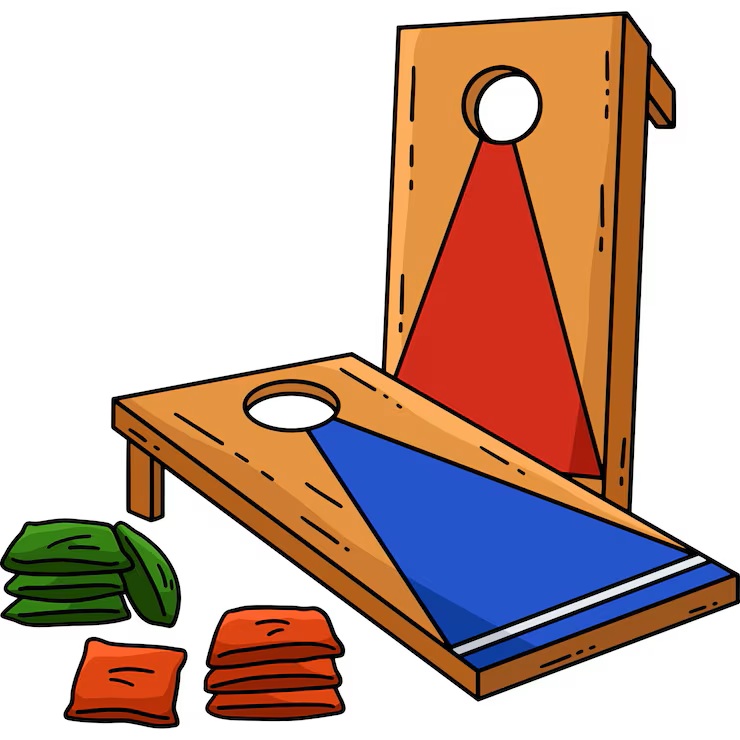
As years pass, backyard games have become increasingly popular as a fun, yet competitive way, to gather and socially interact. From recreational environments with friends and family, to more competitive environments (sometimes also with friends and family), backyard games have evolved through time. One of the more popular backyard games is called Cornhole. This game has become increasingly popular amongst all ages and is played in many different environments. Whether hosting a family or company event or just gathering with friends while on a camping trip, it is very common to find a set of Cornhole boards. The game is also sometimes known as “Bean Bag Toss” or “Bags”, and has been played for many, many years.
.
Over the years, many have claimed origination of the game. What many don't know is that the game of Cornhole may date back as far as the 14th century! One theory is that the game was first designed to keep children from throwing rocks, sometimes into groundhog holes. This new game involved throwing small bags of corn and was created by a cabinet maker named Matthias Kuepermann. Many other theories state ties to a Germain origin or possibly a link to some type of Native American game. The most current form of Cornhole was patented in 1883 and is like the board with hole design today. Like the W3C responsibilities for Web Design, the American Cornhole Association was established in 2003 to better assist with the standardization or rules of the game.
In this page, you can find all sorts of information on the game. From the game's court, to rules, to how a set can be built, enjoy my page and be sure to email me with any questions or comments!
What to Do / What not to Do
To play, two Cornhole boards are needed, 8 bags (4 for each person or team), and 2-4 players. For more information on the sizing of the boards and bags, please see the Build link at the top of this page. Boards are technically placed 27 feet apart from the front edges of the boards; however, this will greatly vary on the settings in which the game is played. On a competitive level, a strict 27-foot distance is enforced. However, for recreational play, this can sometimes be shortened depending on age and skill level.
Ultimately, the objective of the game is to reach or exceed a total of 21 points. A cornhole bag that is thrown through the hole is worth 3 points. A bag that is thrown and lands on the board, without falling off, is worth 1 point. If a bag is thrown that lands on the ground, or bounces onto the board, that is worth 0 points. Each round, or inning, of 8 bags thrown has what is called “Cancellation Scoring”. Only one team can score points in a single inning, so whichever person or team has the most points in that round will keep those points. The number of points earned in that round is the difference in the two scores. For example, Person A throws and earns 4 points in a round, while Person B earns 3 points in a round. Person A would get 1 point for that round, where Person B would get 0 – better luck next inning!
Clear Some Space!
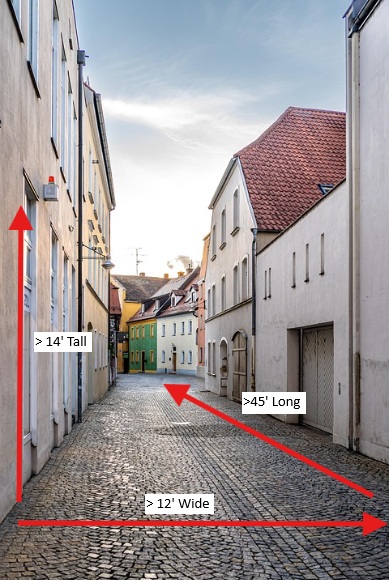
The game of Cornhole is fun to play both indoors and outdoors. The game is commonly played in backyards, gymnasiums, campsites, and even local business establishments where leagues are held. A Cornhole court should typically be a level surface, although this is not commonly the case for recreational play. The court area should be 10-12 feet wide and at a minimum length 40-45 feet long. This will ensure proper space for board placement, as well as room for the players or teams. With recreational play, adjustments can be made based on the amount of space available, or differences in skill levels. Some recreational game play may be done with boards spaced out far less than 27 feet. Another factor in a Cornhole court is the vertical clearance or height of the designated area. It is best for at least 12 to 14 feet of clearance to ensure thrown bags do not connect with any ceiling obstructions. If multiple lanes are present at one time, like in a tournament setting with multiple games, it is most important for the court lane to be at least 12 feet wide to ensure ample space is available for gameplay. Overall, the game can be competitive, but ultimately it is for fun!
The “pitcher’s box” is a rectangular space at each end of the Cornhole court, and measures 4 feet by 3 feet. Again, in a recreational setting, this is usually just the area on each side of the board, give or take. In a competitive setting, each player must remain in the pitcher’s box when tossing a bag. A Cornhole court has two sets of foul lines, one is designated for adult play while the other is lined for Junior play for those 12 years and under. Adult foul lines extend across the front end of each board, where the Junior foul lines are 12-15 feet between the front of each board. As mentioned, the game is for fun and it’s always more fun to score, so alterations are frequently made in a recreational environment.
The Equipment and Build
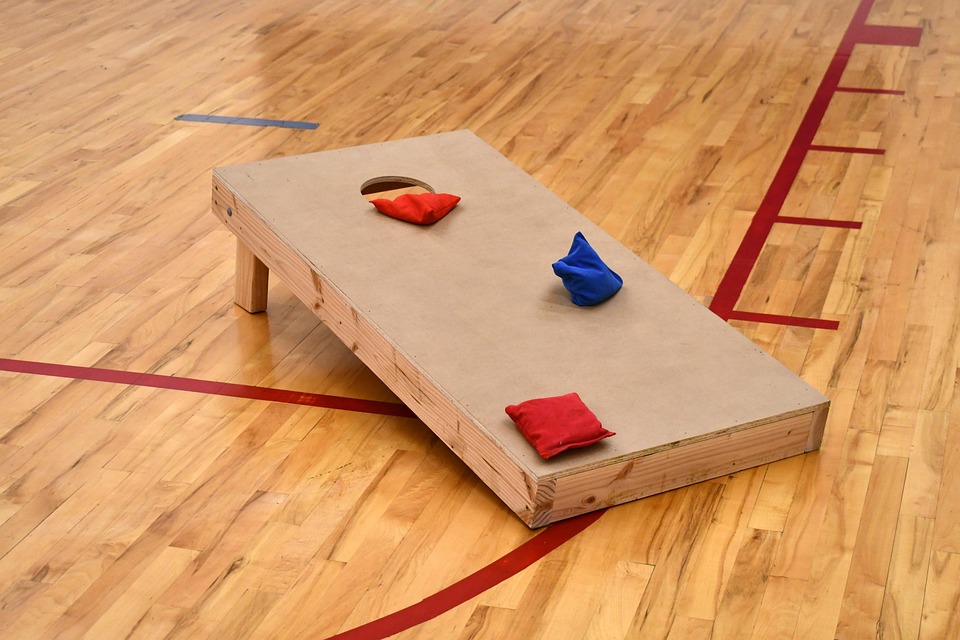
The game of Cornhole involves 2 boards and 8 total bags. Each standard board is 2 feet wide by 4 feet long. A 6” hole is drilled and positioned 9” from the top of the board. Each board has folding legs on the far edge, so it sits about 12” high from the ground with close to a 10-degree slope down from back to front. The bags used in this game are 6” by 6” and weigh approximately 16 ounces. Although many bags contain corn fillings, different options are available today including different plastic pellets as an example. Some leagues and tournaments have requirements of bag type that can be used. The material in which Cornhole bags is made from is typically a durable fabric, most commonly a duck cloth – competition style bags will also sometimes have one side made of a suede-like material.
The construction of the Cornhole board can be simple for the average DIY craftsman, but many alternations are available. A 4 foot by 2-foot board topper is nailed to an underlying frame. The board topper is typically at least ½” thick, but most are closer to ¾” thick and are made from different types of wood. Recreational users and builders will sometimes use a cost-efficient Pine plywood, where more avid players will use Baltic Birch due to its strength and smooth finish. For the framing, 1-2” by 4” planks can be used to create the 2 feet by 4-foot underlying support. The planks are cut to size and then nailed together to form this frame. Once the frame is built, the ¾” topper is placed on the frame and nailed down. Screws and/or the use of glue can be used as preferred, however not always required.
Contact Form
Elements
Text
This is bold and this is strong. This is italic and this is emphasized.
This is superscript text and this is subscript text.
This is underlined and this is code: for (;;) { ... }. Finally, this is a link.
Heading Level 2
Heading Level 3
Heading Level 4
Heading Level 5
Heading Level 6
Blockquote
Fringilla nisl. Donec accumsan interdum nisi, quis tincidunt felis sagittis eget tempus euismod. Vestibulum ante ipsum primis in faucibus vestibulum. Blandit adipiscing eu felis iaculis volutpat ac adipiscing accumsan faucibus. Vestibulum ante ipsum primis in faucibus lorem ipsum dolor sit amet nullam adipiscing eu felis.
Preformatted
i = 0;

while (!deck.isInOrder()) {
    print 'Iteration ' + i;
    deck.shuffle();
    i++;
}

print 'It took ' + i + ' iterations to sort the deck.';